


Pest Control Marketing That Actually Works Podcast
Most pest control companies close a sale, do the job, and move on. The customer you just served is five to seven times cheaper to sell to again than a stranger you've never met. But most operators never make the second offer.
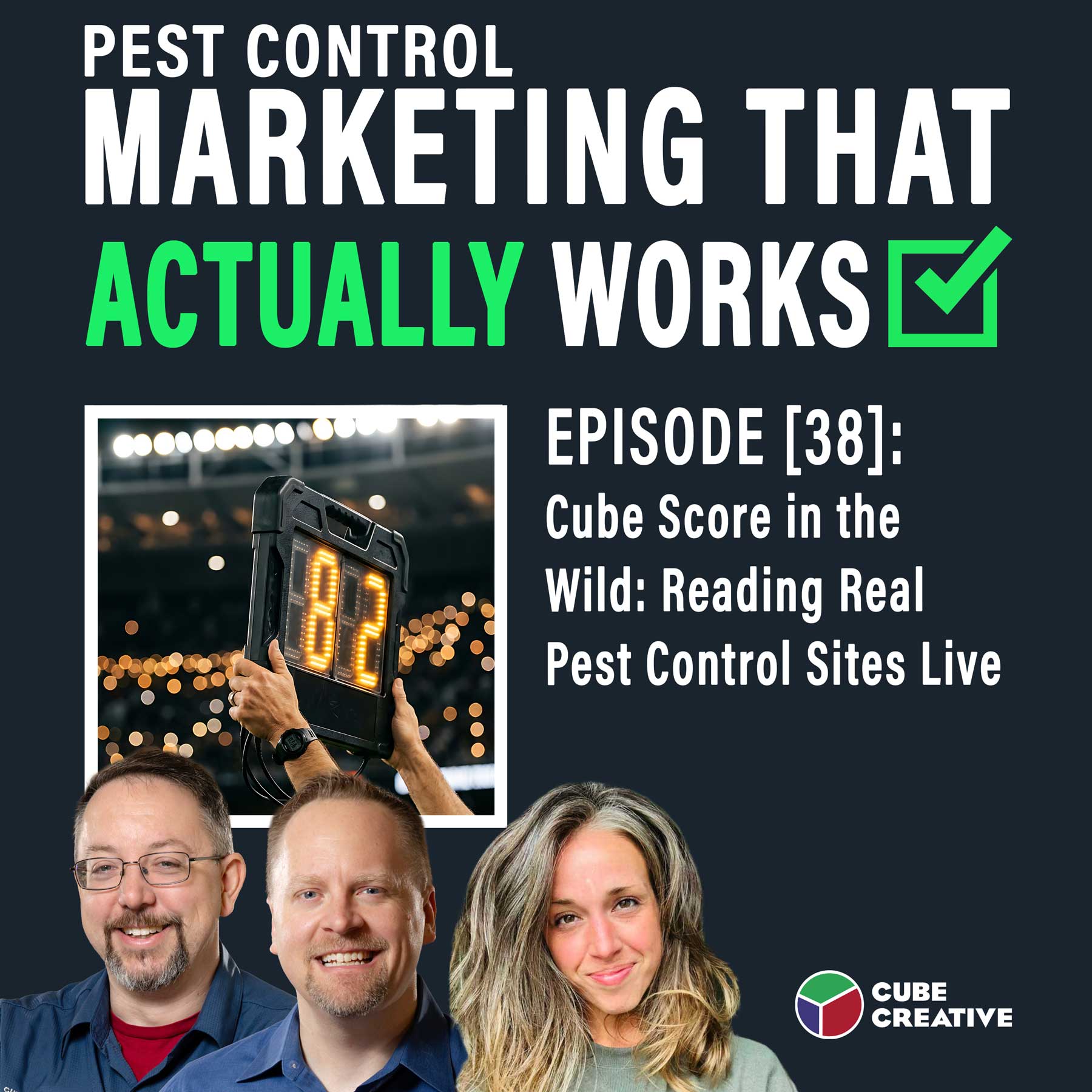
Chad Treadway has audited over 200 pest control websites. When we ran seven of them through the Cube Score, our own grading tool, the results didn't go the way we expected. A five-location operation with 1,500 reviews scored 136.
Your website is built for homeowners, and that's exactly why property managers skip you.
Your pest control website gets traffic. The question is whether that traffic turns into phone calls and booked jobs. In Episode 36, Adam Bennett, Elisabeth Pallante, and web project specialist Emily Porter walk through the Conversion Stack, a five-layer framework for diagnosing exactly where your website loses visitors between landing and converting.
Everybody in pest control calls fall the slow season, so everybody spends less in it. That's backwards. Demand doesn't drop in October, it moves indoors, and rodent work carries higher urgency and a higher ticket than most of what you sell in July.
Pest control owners almost always describe their problem as a lead problem. Count the customers who left last year and it usually turns out to be a leaving problem instead. Revenue can climb while a quarter of the customer base walks out the back door, because new sales cover the hole and nobody checks.
Your trucks are the cheapest billboards you'll ever own.
This week we did something different. Instead of one topic, we pulled the real questions pest control owners keep asking us and answered six of them straight.
Your contact form is probably losing more leads than your competitors are.