You added 40 new accounts last quarter. Your route board looks about the same as it did in January. Somewhere between the two facts is a number nobody at your company tracks closely, and it is quietly eating your year.
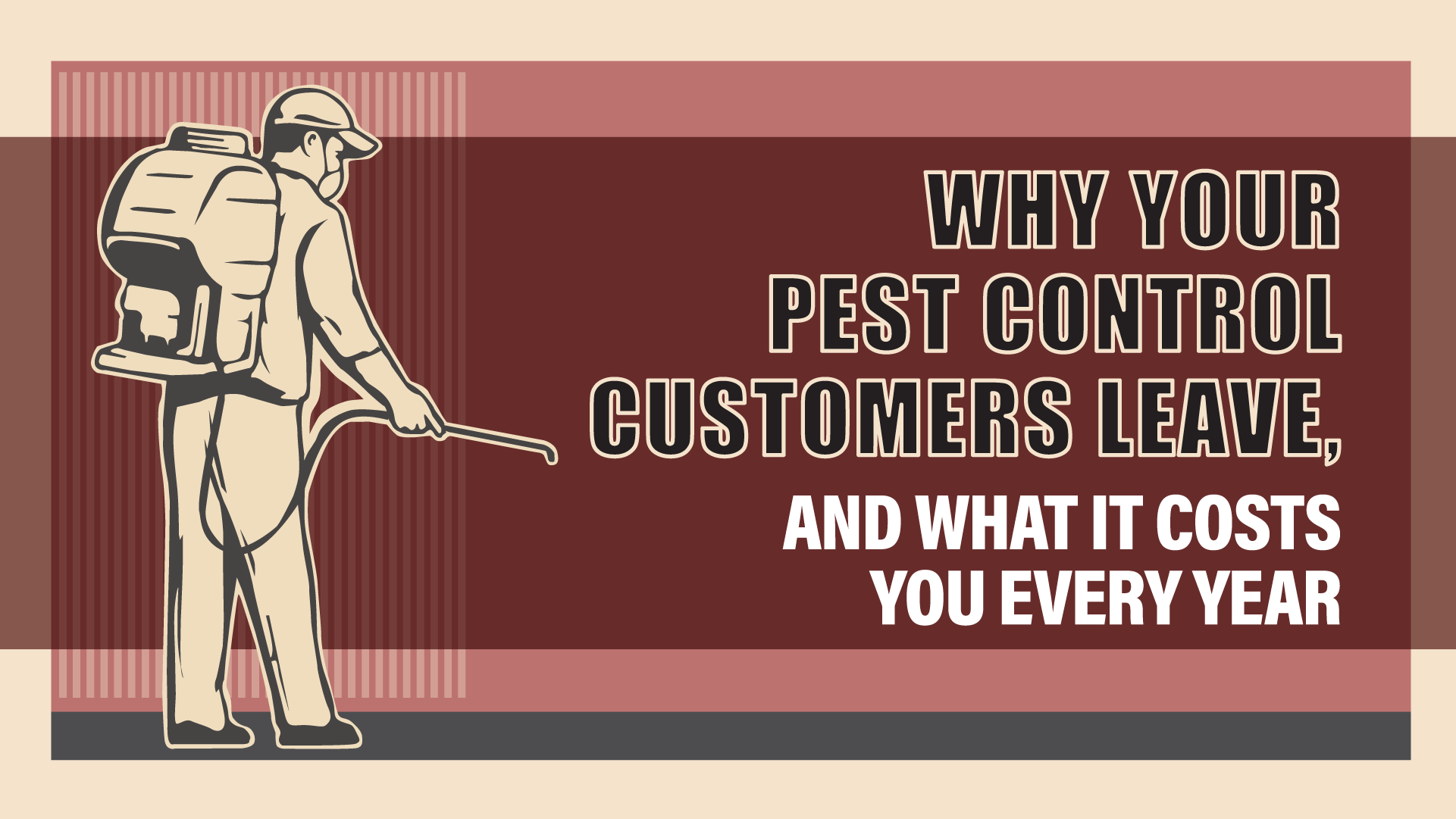
When owners tell me they are losing pest control customers to competitors, they usually open with a lead generation problem. Calls are down. The website is not pulling. The last agency did not deliver. Then we look at the cancellation log, and the real story shows up: the front door is fine. The back door is wide open.
This is the least fun conversation I have with pest control companies, because the reframe stings. A competitor almost never walks up and takes a customer from you. Your customer goes quiet, feels forgotten, decides the service is not doing much anymore, and then answers the first postcard or neighbor recommendation that crosses their path. The competitor did not open the door. They walked through one you left open.
So this post is not a list of ways to out-advertise the guy across town. It covers what normal churn actually looks like in this industry, the specific reasons customers leave, what those departures cost you in real dollars, and where your marketing and your operations have to meet if you want the bucket to hold water.

Written By: Adam Bennett | September 30, 2026
Adam is the president and founder of Cube Creative Design and specializes in private school marketing. Since starting the business in 2005, he has created individual relationships with clients in Western North Carolina and across the United States. He places great value on the needs, expectations, and goals of the client.
Most pest control companies struggle with SEO because the strategy behind it was never built for pest control. The site loads fine. The keywords sit in the right places. The phone still doesn't ring. That gap is the honest answer to why pest control companies struggle with SEO, and it has almost nothing to do with code. Cube Creative Design has built websites since 2005 and works with pest management companies on search, and the same handful of causes show up again and again. This post names them, in plain language, so you can figure out which one is yours before you fire another agency.

Written By: Chad J. Treadway | September 30, 2026
Chad is a Partner and our Chief Smarketing Officer. He will help you survey your small business needs, educating you on your options before suggesting any solution. Chad is passionate about rural marketing in the United States and North Carolina. He also has several certifications through HubSpot to better assist you with your internet and inbound marketing.
Pest control companies compare four kinds of website builders: generalist home-services agencies, national platform agencies, small pest-focused shops like Cube Creative Design, and do-it-yourself builders. Cube is the third group.
Three proposals, three sets of pretty mockups, three monthly numbers that do not line up. One agency quotes the website separately. One folds it into a retainer. One will not quote anything until you sit through a call.
I run Cube Creative Design, so I have a stake in how this question gets answered. That is exactly why this is a roundup and not a sales page. If you want to know how Cube Creative Design's pest control web design stacks up against competitors, the honest answer starts by naming every kind of builder you can hire, including the ones I am not. I work with local pest control businesses who fell in love with a design and never asked who owned the file.
Here are the four options, what each one does well, who it fails, and the questions that separate them.
Written By: Chad J. Treadway | September 29, 2026
Chad is a Partner and our Chief Smarketing Officer. He will help you survey your small business needs, educating you on your options before suggesting any solution. Chad is passionate about rural marketing in the United States and North Carolina. He also has several certifications through HubSpot to better assist you with your internet and inbound marketing.
Small pest control businesses benefit from SEO services in four concrete ways. You show up in the map pack when a homeowner nearby searches for an exterminator. You rank for the "[pest] + [city]" searches your bigger competitors are already chasing. You compete against national chains on ranking factors none of them can buy. And you turn search into phone calls you did not have to rent by the click.
None of that requires a national budget. It requires the right work, finished completely, which is exactly where most three-person shops stall out. If you run one of the local pest control businesses with one technician and a part-time office helper, you are not short on effort. You are short on hours.
Think about a termite pretreat. Nobody sees the work, the homeowner never walks the trench with you, and the payoff shows up years later when the house is still standing. Search works the same way. Here is what the work buys a company your size, what it costs, and what the first year actually looks like.
Written By: Chad J. Treadway | September 28, 2026
Chad is a Partner and our Chief Smarketing Officer. He will help you survey your small business needs, educating you on your options before suggesting any solution. Chad is passionate about rural marketing in the United States and North Carolina. He also has several certifications through HubSpot to better assist you with your internet and inbound marketing.