Most pest control owners I talk to in the 20-to-80-truck range can recite their cost per lead from memory. Ask them their actual annual retention rate last year, and you get a guess, a shrug, or a confident answer that is two to four points off when we pull it from their FSM. That gap is where the money lives. The pest control customer retention math is the most important spreadsheet in your business, and almost nobody is running it. I work with pest control operators at this size every week, and the pattern is the same: the owner is busy chasing new leads while quiet money walks out the back door, one canceled service at a time. This post lays out the math, the benchmarks, the worked dollar example, and what to do with it. Companion piece to the subscription valuation post — retention is the lever that decides which valuation multiple you get when a buyer eventually sits at your kitchen table.

Written By: Chad J. Treadway | May 15, 2026
Chad is a Partner and our Chief Smarketing Officer. He will help you survey your small business needs, educating you on your options before suggesting any solution. Chad is passionate about rural marketing in the United States and North Carolina. He also has several certifications through HubSpot to better assist you with your internet and inbound marketing.
It is 10:17 PM on a Saturday. A homeowner just pulled back the sheets, found a bed bug, and is one search result and one form away from booking the first pest control company that responds. They fill out your contact form, see "we will get back to you within one business day," and tab back to Google. Your form sits in an inbox until Monday at 9. By 10:30 PM Saturday, three competitors have already replied through chat or text, one of them with an AI agent that asked the right questions and dropped the appointment straight into the calendar. The job is gone, the marketing dollar that bought the click is gone, and you do not even know it happened until the next billing cycle.
I work with exterminators and pest control operators at the 5-to-30 employee size every week, and the after-hours leak is the most expensive problem nobody talks about. An AI chatbot pest control after-hours leads system is not a fancy upgrade or a tech-stack flex. It is a speed-to-lead fix that closes the gap between a homeowner's panic at 10 PM and your office opening on Monday. This post walks through the math on why that gap costs you so much, what AI chatbots actually do (and do not do), how the main vendors price out, and what compliance looks like when a bot is collecting phone numbers at midnight.
Written By: Chad J. Treadway | May 13, 2026
Chad is a Partner and our Chief Smarketing Officer. He will help you survey your small business needs, educating you on your options before suggesting any solution. Chad is passionate about rural marketing in the United States and North Carolina. He also has several certifications through HubSpot to better assist you with your internet and inbound marketing.
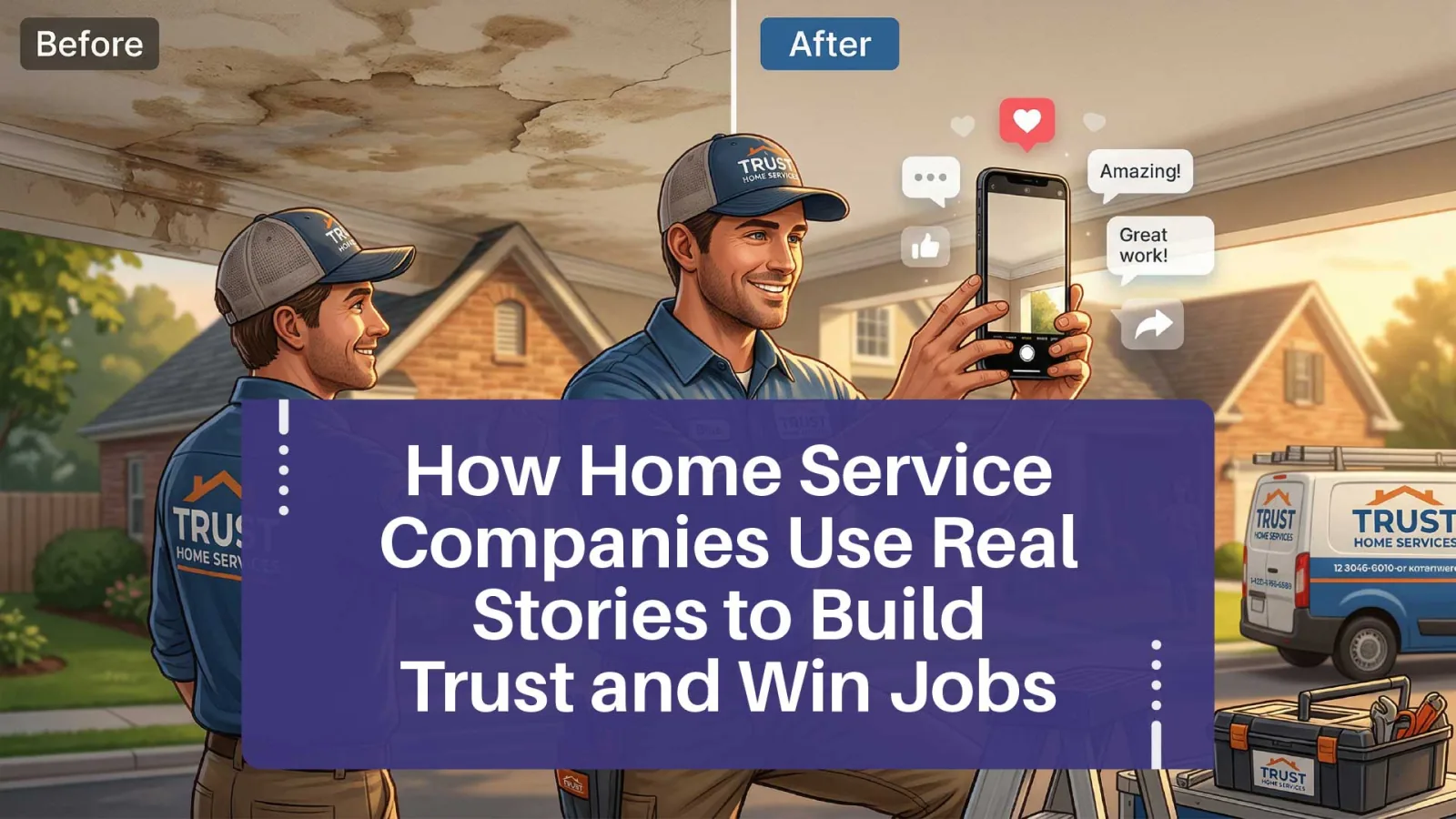
Every home service business has a story. The problem is, most of them never tell.
You are out there every day solving real problems for real people. A family's furnace dies at 2 a.m. in January, and your tech shows up, fixes it, and saves the night. A first-time homeowner finds a sewer line backup the week they move in, and your crew handles it professionally and at a fair price. These are not just jobs. They are stories. And they are the most powerful marketing tool you are not using.
This post is about storytelling for service businesses, not the kind that requires an ad agency or a creative writing degree. The kind that turns your actual work into content that builds trust, creates emotional connections, and wins you more customers.
Written By: Chad J. Treadway | May 12, 2026
Chad is a Partner and our Chief Smarketing Officer. He will help you survey your small business needs, educating you on your options before suggesting any solution. Chad is passionate about rural marketing in the United States and North Carolina. He also has several certifications through HubSpot to better assist you with your internet and inbound marketing.
Community marketing for a pest control company with a chamber membership, a wrapped truck, and three crew members is the most undervalued revenue lever in the industry, and most owner-operators run right past it. You drive your truck through the same service area five days a week, you waved at the same coach at last week's Little League practice, and you still cannot figure out why so many homeowners on your route are paying a national chain you have never met. The problem is not your treatment, your pricing, or your technicians. The problem is that you are still a stranger. For a 3-truck shop or an 8-employee operation pulling somewhere between $180,000 and $750,000 a year, the path forward is not a bigger ad budget. It is being recognized at the gas station, the coffee shop, and the school fundraiser before the homeowner ever has a roach problem.
I work with independent pest control companies at this size every week, and most of them treat their chamber membership like a gym membership: paid for, rarely used, and quietly making them feel guilty. The chamber is not a directory. It is a referral engine. The same is true of a $300 sponsorship banner on the outfield fence, a $1 handwritten thank-you card, and the yard sign you forgot to ask the customer's permission to leave. Each of those is a community marketing pest control chamber-style asset that builds the local trust national chains cannot buy at any price. This post lays out how to use them, what realistic numbers look like at your size, and where small companies usually leave money on the table.
Written By: Chad J. Treadway | May 12, 2026
Chad is a Partner and our Chief Smarketing Officer. He will help you survey your small business needs, educating you on your options before suggesting any solution. Chad is passionate about rural marketing in the United States and North Carolina. He also has several certifications through HubSpot to better assist you with your internet and inbound marketing.