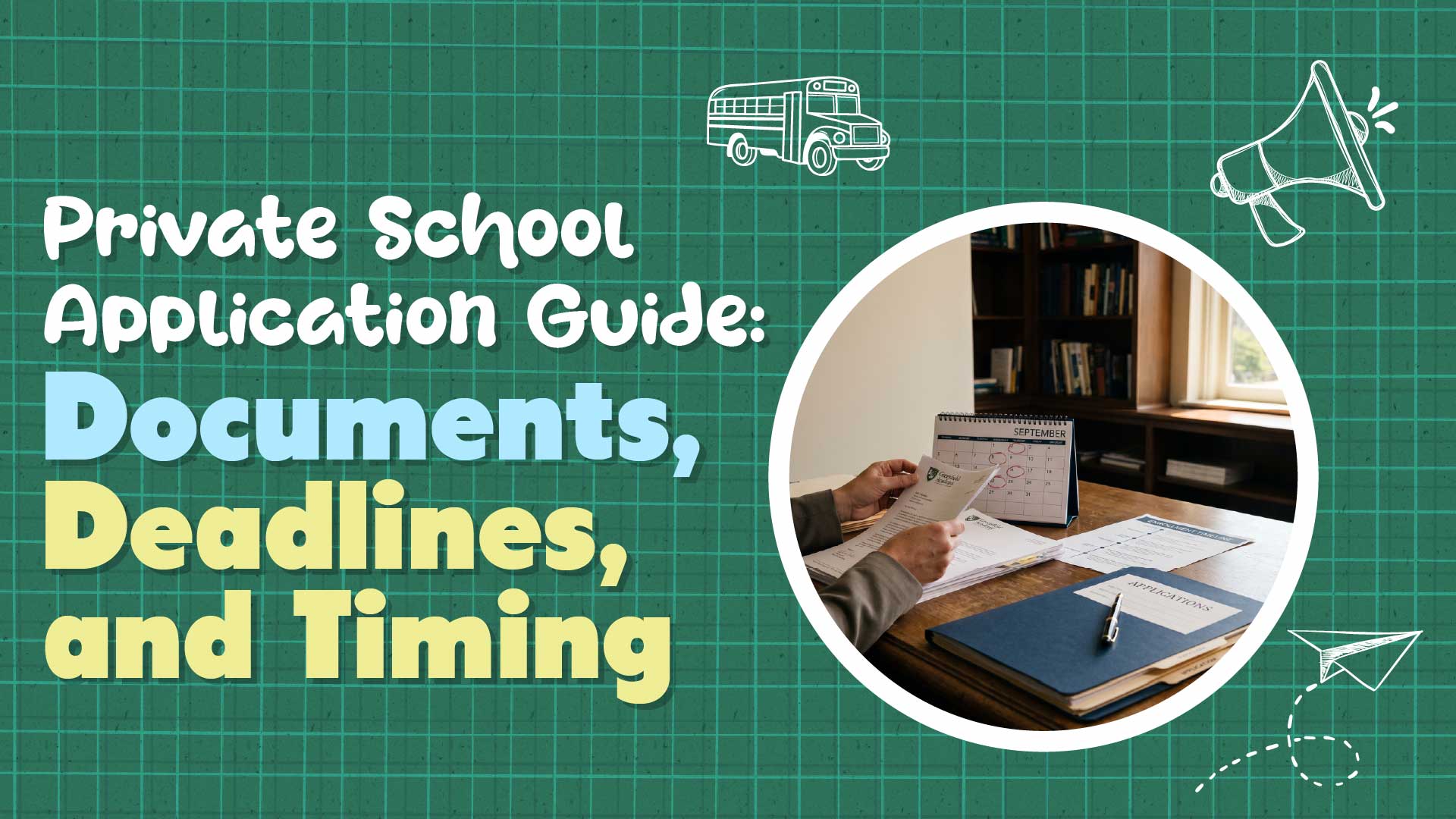
No one hands you a syllabus for this. You decide your child might do better somewhere else, you read four school websites, and you get four versions of the same soft promise: apply this winter, we will be in touch. Then you learn that a private school application has six or seven separate parts, and that other people have to finish half of them for you.
I work at Cube Creative Design, where we build websites and enrollment marketing for private school administrators. I read admissions pages for a living. Most of them are written by people who already know the process, for people who do not. The information is technically there. The sequence almost never is.
This guide lays out what the application actually requires, when each piece comes due, how financial aid changes the schedule, and where families lose the most time. Individual deadlines vary by school, and you should confirm every one of them. The shape of the year does not vary much at all.

Written By: Adam Bennett | September 07, 2026
Adam is the president and founder of Cube Creative Design and specializes in private school marketing. Since starting the business in 2005, he has created individual relationships with clients in Western North Carolina and across the United States. He places great value on the needs, expectations, and goals of the client.
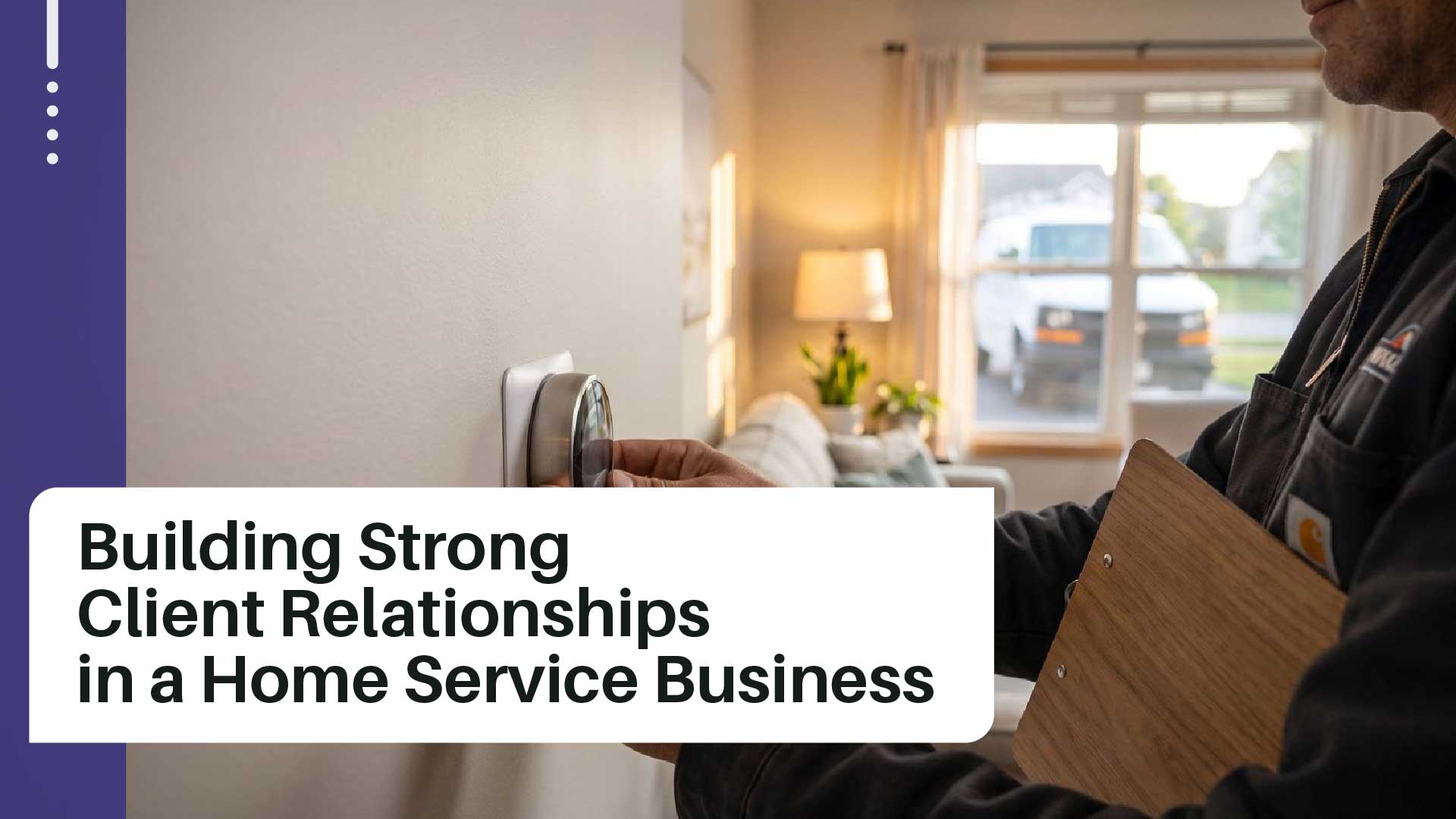
Two technicians finish the same repair on the same afternoon. One closes the ticket, hands over the invoice, and drives off. The other explains what failed, mentions the part that will probably go next spring, and asks whether the customer wants a reminder before the season turns. Six months later, only one of them gets the call.
That is what client relationships in a home service business come down to. Not a soft skill you either have or you don't. A revenue system with moving parts you can actually fix. We market to independent home services companies for a living. The same pattern shows up across every trade. Owners pour money into winning the first call while the second one quietly leaks out the back.
This post covers the three levers that keep customers from shopping around: response speed, service agreements, and seasonal check-ins. Then it covers where all three become visible to the next homeowner who looks you up.

Written By: Chad J. Treadway | September 04, 2026
Chad is a Partner and our Chief Smarketing Officer. He will help you survey your small business needs, educating you on your options before suggesting any solution. Chad is passionate about rural marketing in the United States and North Carolina. He also has several certifications through HubSpot to better assist you with your internet and inbound marketing.
The best SEO service for pest control franchises is the one that can show you its process for handling profiles, pages, and reviews one branch at a time. Not the one with the slickest deck. Almost every "top pest control SEO agency" list you will find was written for an operator with one office, one phone number, and one map pin. You have a dozen of each, and the tactics do not simply multiply.
If you run multiple locations, judge a vendor on five things:
- Google Business Profile management at scale. Can they verify, structure, and maintain a profile for every branch without creating duplicates?
- Location page architecture. Do their branch pages hold real local content, or the same 400 words with the city name swapped?
- NAP consistency across the network. Is there a system for keeping name, address, and phone identical everywhere each branch appears?
- Per-location review generation. Does every branch run its own review engine, or does one flagship office collect all the stars?
- Pricing that tracks unit count. Does the fee change when you open location 13, and do they tell you how before you sign?
That list is the answer. The rest of this post covers what good looks like on each one. It is the same lens I use with pest control businesses that have outgrown single-site advice.
Written By: Chad J. Treadway | September 04, 2026
Chad is a Partner and our Chief Smarketing Officer. He will help you survey your small business needs, educating you on your options before suggesting any solution. Chad is passionate about rural marketing in the United States and North Carolina. He also has several certifications through HubSpot to better assist you with your internet and inbound marketing.
Pest control certification marketing is the part nobody plans for. Owners plan the studying, the paperwork, the exam, and the check. Then the certificate shows up, somebody scans it, a logo gets dropped in the website footer, and that is where the story ends. Months of work, filed.
I have watched this happen at companies of every size, from two-truck shops to regional operations. The credential is real. The pride is real. The marketing is a JPEG nobody scrolls to.
That is a fixable problem, and fixing it is cheaper than earning the credential was. This post is for pest control business owners who already hold a credential, or are about to, and want it to produce booked jobs instead of wall art. If you are still deciding which credentials to pursue and what they cost, start with the complete guide to pest control certifications. This one picks up the morning after the certificate arrives.
Written By: Chad J. Treadway | September 04, 2026
Chad is a Partner and our Chief Smarketing Officer. He will help you survey your small business needs, educating you on your options before suggesting any solution. Chad is passionate about rural marketing in the United States and North Carolina. He also has several certifications through HubSpot to better assist you with your internet and inbound marketing.