You have probably been told your home service company needs more backlinks. What nobody tells you is how many, or where to actually get them, when you are busy running an HVAC, plumbing, or roofing business. Here is the part that should make you feel better: building local backlinks for a home service company is a smaller job than the internet makes it sound. You do not need 500 links. You need 20 to 30 good ones from sources your community already trusts.
At Cube Creative Design, we build local search visibility for independent home services companies, and the link question comes up on almost every call. So this guide skips the theory. It covers how many links you actually need, where real local links come from, and why they matter more for some rankings than others.

Written By: Chad J. Treadway | July 27, 2026
Chad is a Partner and our Chief Smarketing Officer. He will help you survey your small business needs, educating you on your options before suggesting any solution. Chad is passionate about rural marketing in the United States and North Carolina. He also has several certifications through HubSpot to better assist you with your internet and inbound marketing.
Your alumni are the warmest audience your school will ever have, and most schools talk to them once a year, in the form of a giving envelope. That is the marketing equivalent of only calling your closest friends when you need to borrow money. It works for a while. Then it stops working, and nobody can say exactly when the relationship went cold.
Private school alumni engagement is the work of keeping that relationship warm on purpose, year after year, long after a graduate has stopped paying tuition. Done well, it pays a school back in three ways that matter to anyone in admissions and advancement. It brings referrals that feed the enrollment pipeline. It brings volunteers who show up. And it brings gifts that arrive without a guilt trip. We work with private and independent schools that have strong programs and loyal families, but treat their graduates as an afterthought. The pattern is almost always the same. The intent is there. The system is not.
This post lays out what an alumni engagement strategy actually involves for a mid-sized college-prep school. It covers why the payoff shows up in enrollment and not just the annual report. And it gives you a five-part framework you can start using before your next graduating class walks the stage. The numbers here come from independent school sources. Where a benchmark comes from higher education or a mixed survey, it is labeled as such, because your board will check.

Written By: Adam Bennett | July 27, 2026
Adam is the president and founder of Cube Creative Design and specializes in private school marketing. Since starting the business in 2005, he has created individual relationships with clients in Western North Carolina and across the United States. He places great value on the needs, expectations, and goals of the client.
I'm Chad, a partner at Cube Creative Design. RedBrick Web Solutions comes up often enough in conversations with pest control company owners that I wrote the honest, side-by-side comparison I'd want if I were the one signing the contract. This is not a hit piece. RedBrick does several things well, and I'll say so plainly before I make our case.
We're a marketing agency that works with pest control companies, so yes, I have a side. Here's what makes this comparison different from the others in this series. RedBrick and Cube agree on the same core promise: no long-term lock-in, and full ownership of what gets built for you. So this isn't a fight about who's more honest on that point. It's a fight about proof, pricing, and platform. Those are the three places we actually diverge. I'll name where RedBrick is the better choice, because for some companies it honestly is.
Written By: Chad J. Treadway | July 26, 2026
Chad is a Partner and our Chief Smarketing Officer. He will help you survey your small business needs, educating you on your options before suggesting any solution. Chad is passionate about rural marketing in the United States and North Carolina. He also has several certifications through HubSpot to better assist you with your internet and inbound marketing.
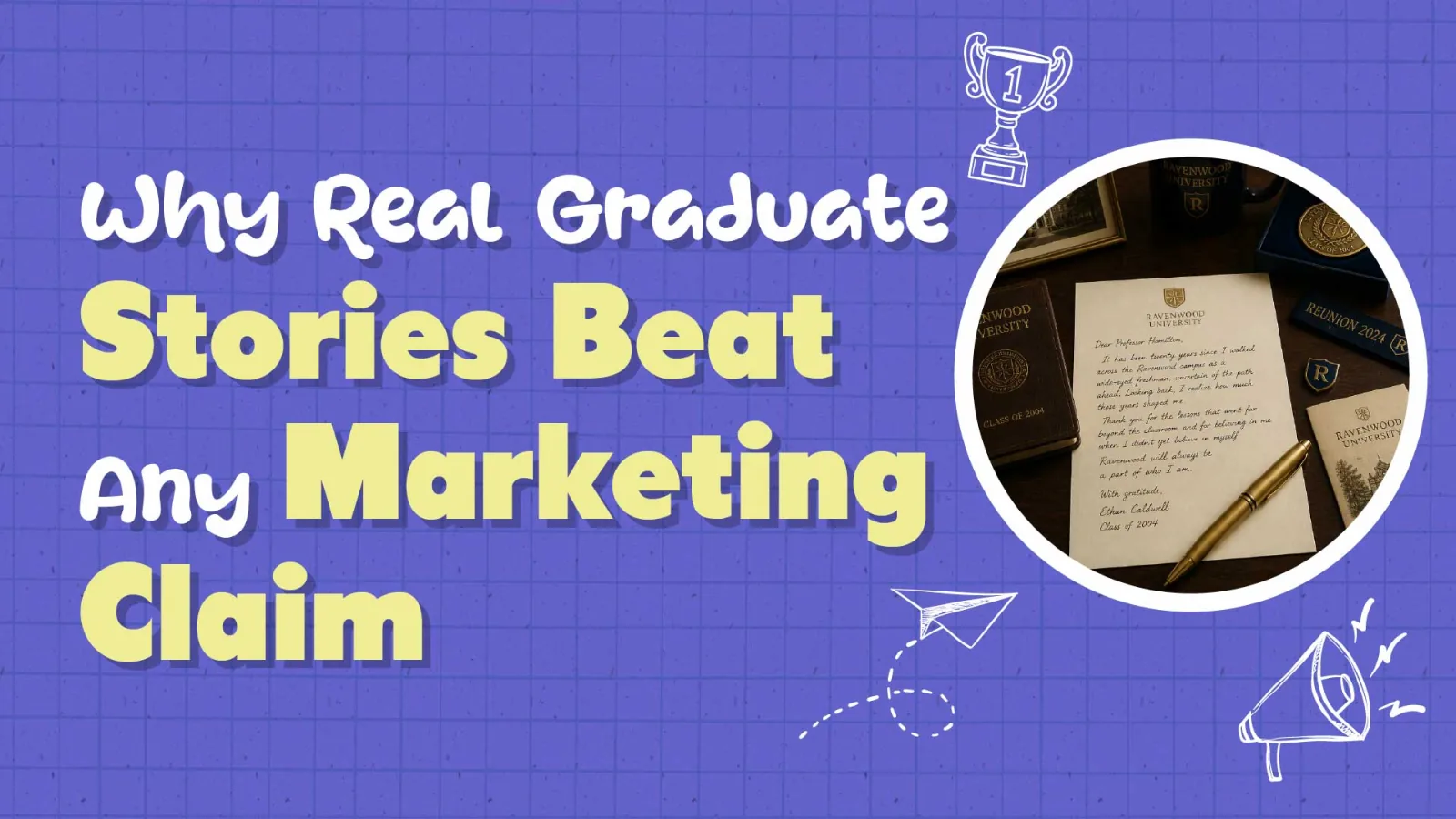
You give the same campus tour twice in one week, and both families ask a version of the same question: "Where do your graduates go?" You know the answer is strong. Your alumni are at good colleges, in good careers, and many still come back to visit. The problem is that none of that proof lives anywhere a prospective family can find it before they walk through your door. Cube Creative Design works with private and independent schools that sit on a goldmine of graduate outcomes and never put them to work. Alumni success stories are how you turn those outcomes into the kind of proof that moves a family from "interested" to "applied." This guide covers why these stories work, how to source them without a big team, where to share them, and the consent rules that make K-12 different.

Written By: Hannah Kilpatrick | July 24, 2026
Hannah Kilpatrick Cube Creative DesignHannah Kilpatrick graduated from Western Carolina University in 2021 with a Bachelor of Science in Communication with a Minor in Marketing and a Concentration in Public Relations. She has been around social media since its creation. (Meaning, she was in the first grade when Facebook became available to the general public.) As our very own professional Gen-Z, Hannah is a whiz when it comes to social media creation and paid advertising.