Ask ten private school marketing directors who their target market is, and you'll get nine variations of the same answer: "families with school-aged children who value quality education." That isn't a target market. That's a definition of the entire competitive category, copied and pasted with a different logo on top. When everyone is your target, no one is, and the inquiry pipeline fills with families who were never a fit in the first place.
The 2025-2026 environment has made vague targeting more expensive than ever. National School Choice Awareness Foundation survey data shows that about 46 million American parents actively considered switching schools in 2025, a five-year high. New federal scholarship legislation has expanded the addressable income pool. Google removed third-party reviews from school business profiles in April 2025, and the families who matter most are doing the majority of their research before they ever know they exist. Schools that haven't updated their target market definition are, generously, two years behind. This post gives private school leaders a concrete framework for fixing that, combining psychographics, decision-factor data, geographic benchmarks, and the applicant-vs-marketing-persona split that separates schools with full waitlists from schools refreshing their dashboards every Tuesday.

Written By: Adam Bennett | June 05, 2026
Adam is the president and founder of Cube Creative Design and specializes in private school marketing. Since starting the business in 2005, he has created individual relationships with clients in Western North Carolina and across the United States. He places great value on the needs, expectations, and goals of the client.
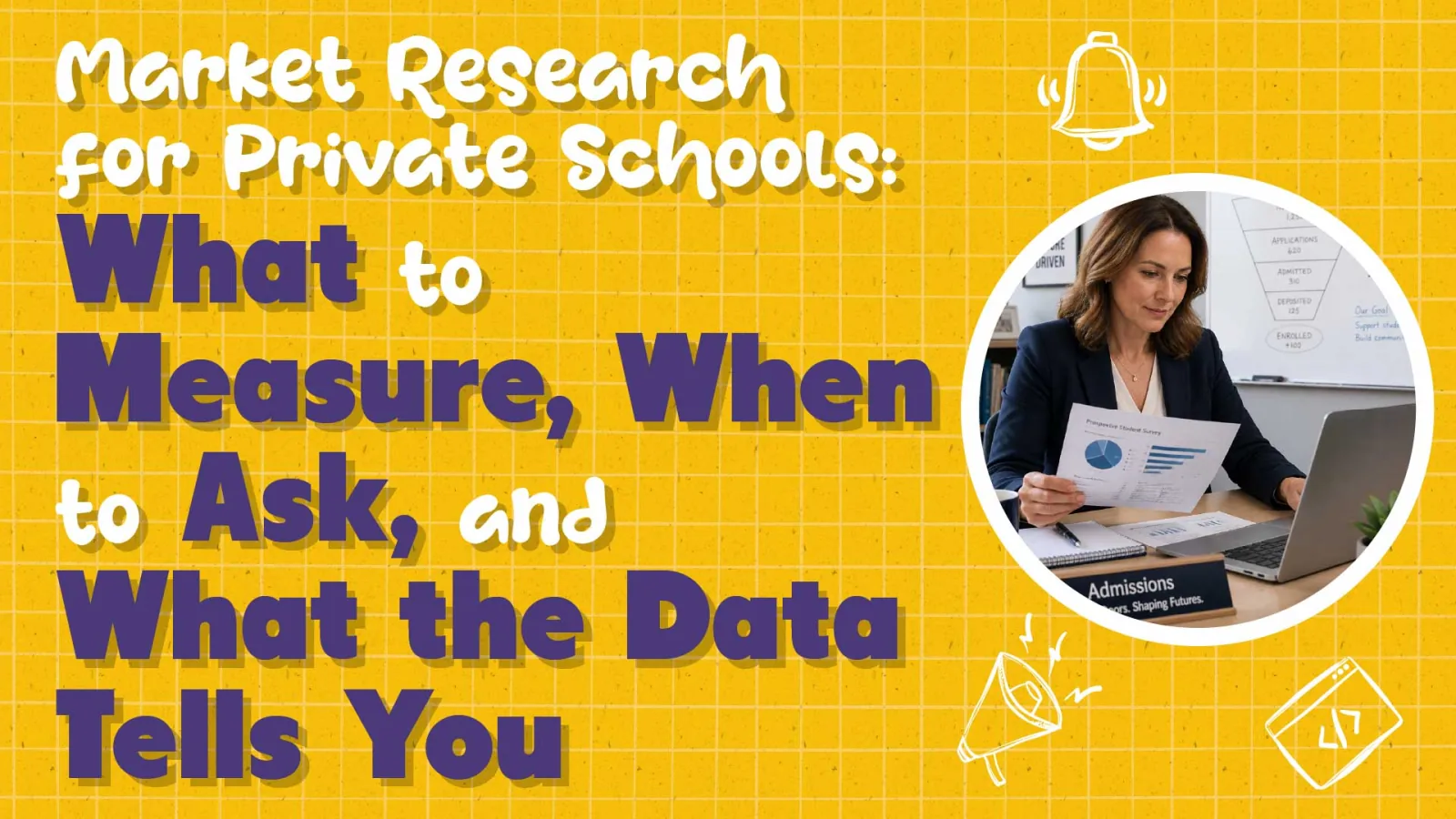
Most private schools' market research strategy is a post-open-house gut check, a glance at the application numbers, and a prayer. The director of admissions tells the head of school the event "felt well-attended." Someone overheard a parent mention safety. Applications are down 10% from last year, and nobody can quite say why. That is not a strategy. That is anecdotal evidence dressed up in a meeting agenda, and for private schools competing in 2026, it is the most expensive habit on the calendar.
The schools winning enrollment battles right now do the unglamorous work of measuring things. They survey the families who left. They benchmark inquiry-to-tour rates against industry data. They know which touchpoint moves a family from "interested" to "applied." This is the discipline of market research, and it is what separates a school marketing director who keeps her job from one who explains, again, why this fall's class came in short. For private school marketing teams ready to trade impressions for intelligence, the methodology is well-defined, the benchmarks exist, and the tools are accessible. This post is the working tour.
Written By: Adam Bennett | June 04, 2026
Adam is the president and founder of Cube Creative Design and specializes in private school marketing. Since starting the business in 2005, he has created individual relationships with clients in Western North Carolina and across the United States. He places great value on the needs, expectations, and goals of the client.
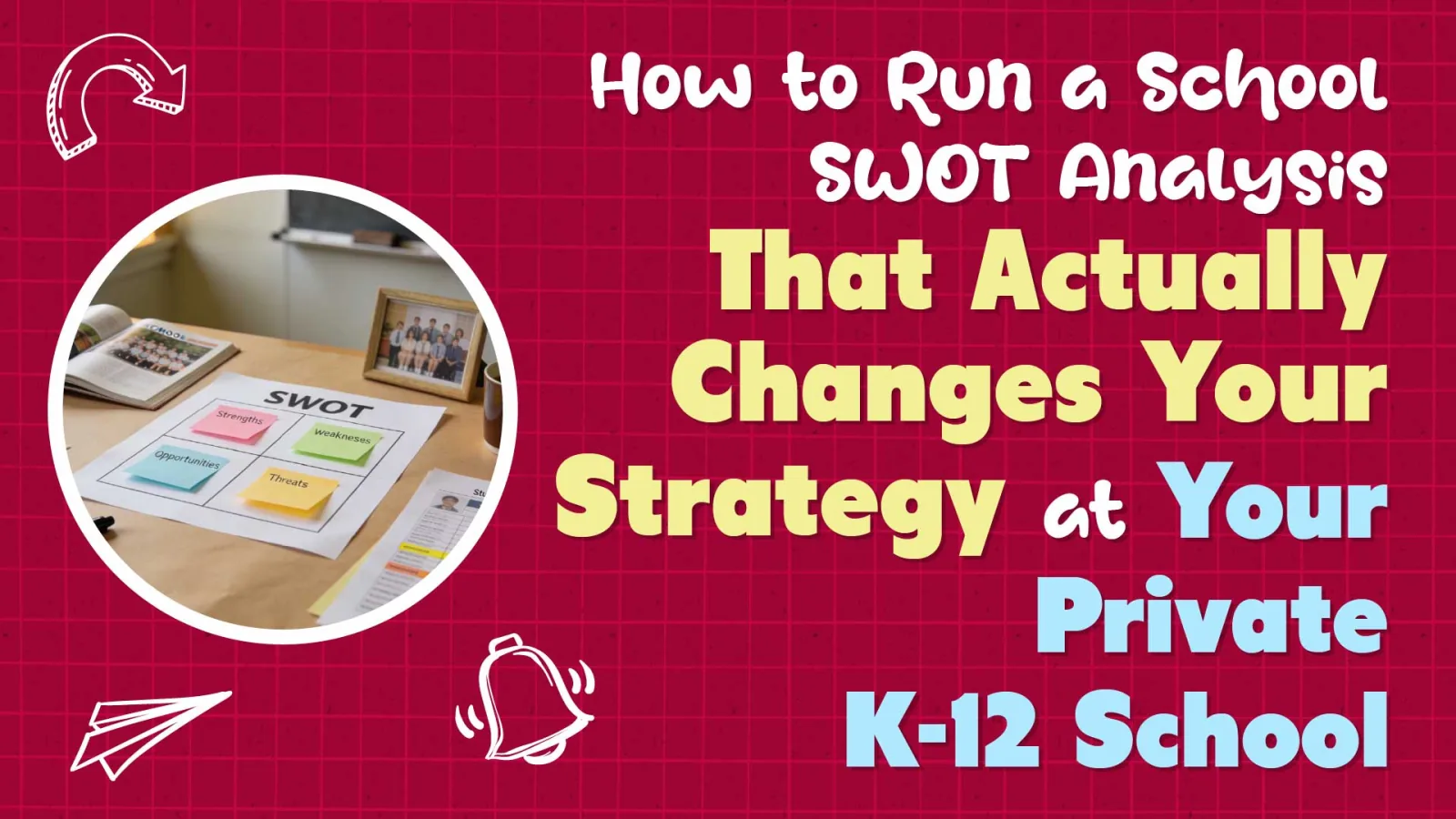
Your school probably has a strategic plan. It probably took months to produce, involved a consultant, and is currently sitting in a binder on a shelf in the development office. Nobody has opened it since the board approved it. That is not a strategy. That is a compliance document.
A real SWOT analysis is supposed to be the diagnostic that drives every enrollment and marketing decision you make for the next year. Most schools do not use it that way because most schools have never been shown how. They treat SWOT as a brainstorming exercise; it should be a stress test.
This guide is for the principal who is also the marketing director, the admissions counselor, and the person fixing the website at 10 PM. We work with private school leaders every week who tell us their last SWOT produced exactly zero decisions. Here is how to run one that does.
Written By: Adam Bennett | June 03, 2026
Adam is the president and founder of Cube Creative Design and specializes in private school marketing. Since starting the business in 2005, he has created individual relationships with clients in Western North Carolina and across the United States. He places great value on the needs, expectations, and goals of the client.
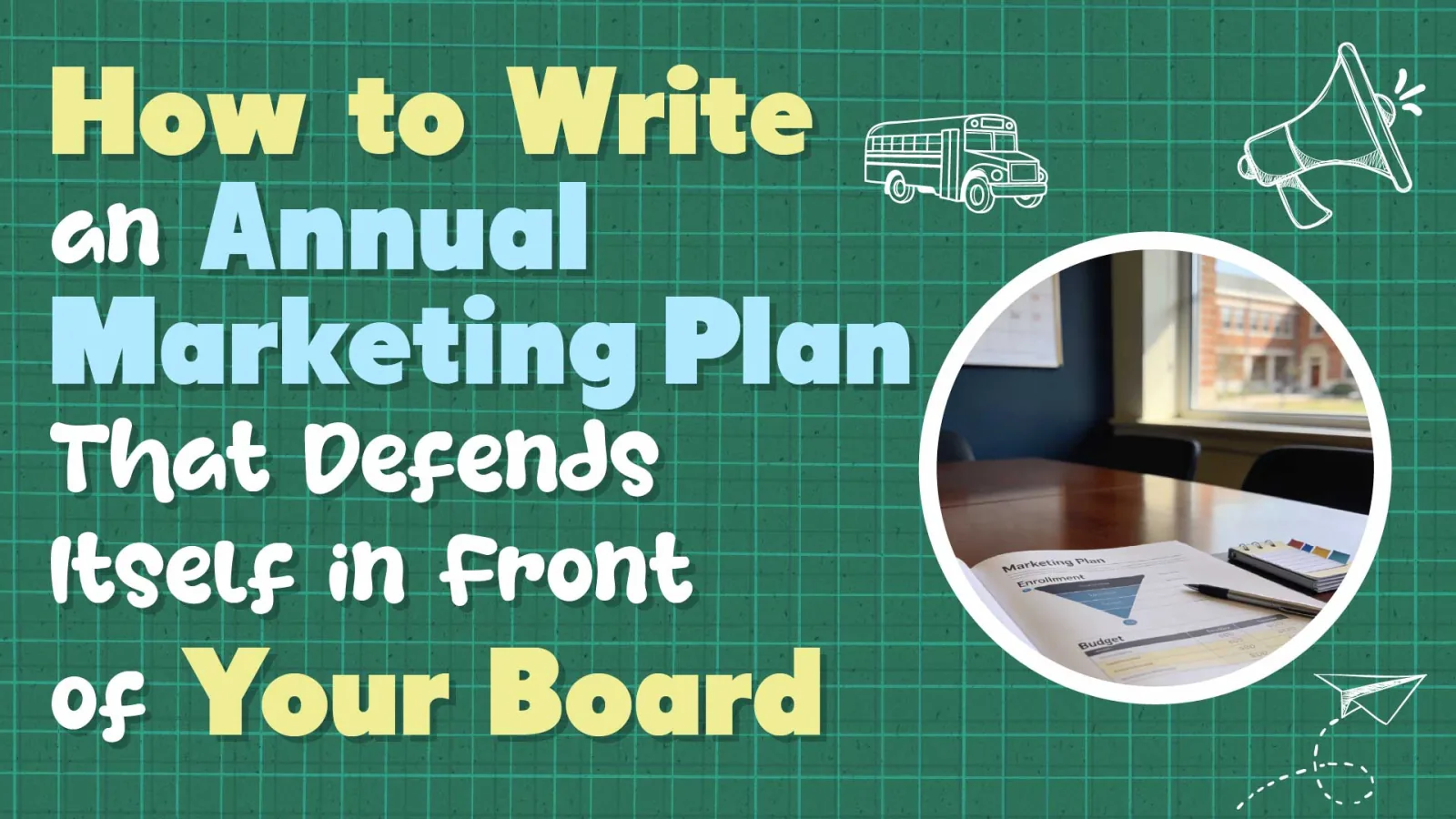
Quick test. Pull up your school's marketing plan template and read the first page. If what you find is a Google Calendar, a viewbook refresh, and a vague intention to "do more on Instagram this year," you do not have a plan. You have a wish list with deadlines.
A real annual marketing plan is a strategic document. It quantifies the enrollment funnel, allocates budget by channel against measurable outcomes, accounts for the demographic shift already pinching K-12 pipelines, and dedicates explicit attention to retention rather than treating it as an afterthought. Most heads of school cannot produce that document on demand, which is exactly why most schools spend their marketing budgets reacting instead of planning. This piece walks through the framework that we build with private and independent schools every year. By the end, you will have the template you need to either build one in-house or evaluate whether the agency you already hired is delivering one.
Written By: Adam Bennett | June 02, 2026
Adam is the president and founder of Cube Creative Design and specializes in private school marketing. Since starting the business in 2005, he has created individual relationships with clients in Western North Carolina and across the United States. He places great value on the needs, expectations, and goals of the client.