If you run a pest control company and your website traffic dropped sometime in 2024, you are not imagining it. You are not behind on something everyone else figured out. And no, your old web guy did not break something on the way out. Three separate Google changes landed inside a nine-month window, and pest control sites took the brunt of all three because of how the industry built its websites between 2015 and 2023. The companies that held up did three specific things differently. The companies that did not are the 90%.
This post is the longer mechanical explainer behind what we have been calling the Triple Convergence. We work with pest control marketing clients across the country, and the same three patterns show up everywhere. If you want the audit summary and the diagnostic, the companion field report covers that. This post is for the owner who wants to understand why the rules changed and what an industry-wide algorithm shift actually looks like at the page level.

Written By: Chad J. Treadway | June 24, 2026
Chad is a Partner and our Chief Smarketing Officer. He will help you survey your small business needs, educating you on your options before suggesting any solution. Chad is passionate about rural marketing in the United States and North Carolina. He also has several certifications through HubSpot to better assist you with your internet and inbound marketing.
There is a specific moment every growing home service business owner hits. You are sitting across from a potential commercial client, and you slide your business card across the table. The logo looks like it was designed in Microsoft Paint. The tagline references a service you stopped offering three years ago. And you realize that the brand representing your $800,000 company looks like it belongs to a one-man operation running jobs out of a pickup truck.
That moment is uncomfortable. It should be. Because your brand is the first thing people judge, and if it does not match the quality of your work, you are losing customers before you even get a chance to talk to them.
Rebranding is not vanity. For home service companies that have outgrown their original identity, it is a business decision with measurable impact. Research by Marq (formerly Lucidpress) found that consistent brand presentation across all channels increases revenue by up to 20% (1 in 5 dollars). The question is not whether your brand matters. It is whether your current brand is helping or hurting you.

Written By: Adam Bennett | June 23, 2026
Adam is the president and founder of Cube Creative Design and specializes in private school marketing. Since starting the business in 2005, he has created individual relationships with clients in Western North Carolina and across the United States. He places great value on the needs, expectations, and goals of the client.
If your pest control website's traffic is down, you are not imagining it. You are not behind on something everyone else figured out. You are sitting inside an industry-wide decline that started in 2024, and most of the field is still in denial about it. Our 2026 audit looked at 300 pest control companies across the country, and the pattern is the same almost everywhere: organic traffic is down, map pack visibility is shaky, and most of the marketing playbook that worked between 2018 and 2023 stopped working at roughly the same moment.
This post walks through what changed, what the audit found, and how to figure out which of the four most common problems is hitting your site right now. If you run a 6 to 20-technician shop and you have been wondering why the phone is quieter even though your service quality is the same, this is for you. We work with pest control business owners every day who are seeing the exact same numbers, and the diagnosis is almost never what owners think it is.
Written By: Chad J. Treadway | June 23, 2026
Chad is a Partner and our Chief Smarketing Officer. He will help you survey your small business needs, educating you on your options before suggesting any solution. Chad is passionate about rural marketing in the United States and North Carolina. He also has several certifications through HubSpot to better assist you with your internet and inbound marketing.
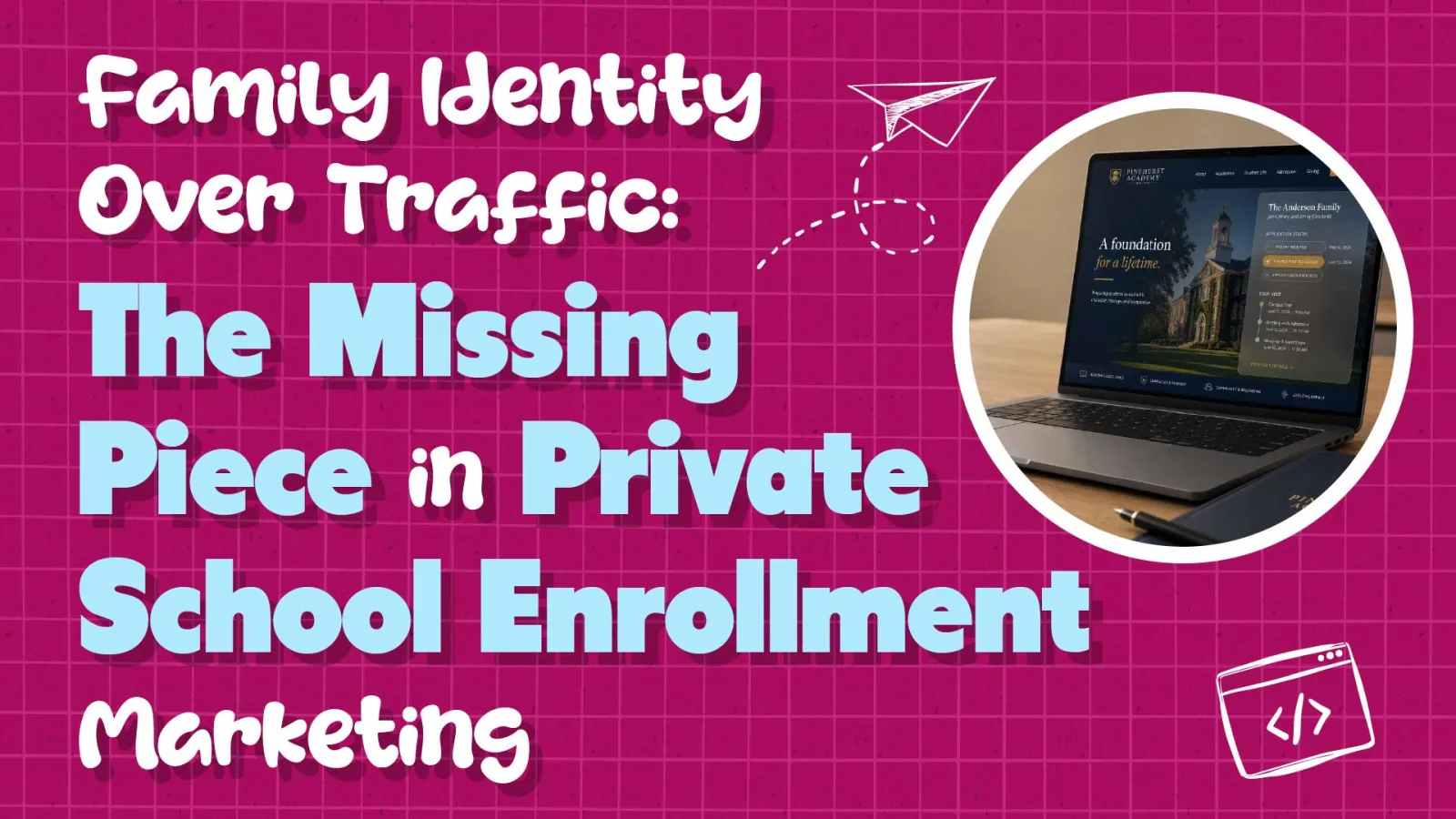
Most school marketing spends money to drive more traffic. More clicks, more visitors, more impressions. But here's the uncomfortable truth: traffic alone doesn't fill seats. If you can't see who is behind those visits or what they're actually researching on your site, you're leaving enrollment on the table.
An identity-first approach changes that equation. Instead of counting anonymous visitors, you identify families at the household level, enrich that data with demographic context, and track what they're actually researching across multiple visits. That's when your website stops being a traffic report and becomes an enrollment intelligence tool. We help private schools implement this exact system to turn traffic into qualified families ready to apply.
This isn't a replacement for your existing admissions system. It's a smarter way to power it. And it works because every meaningful interaction (pricing page, program details, financial aid information) becomes a signal you can act on immediately.
Written By: Adam Bennett | June 23, 2026
Adam is the president and founder of Cube Creative Design and specializes in private school marketing. Since starting the business in 2005, he has created individual relationships with clients in Western North Carolina and across the United States. He places great value on the needs, expectations, and goals of the client.